
Hair loss is usually gradual — a hairline that recedes a little more each year. Patients often begin their search for the best hair transplant in Bangalore right here, at Perfect U, where FUE and DHI are paired with careful planning and strong graft survival.
It's less complicated than it sounds. Follicles come from a donor zone, usually the back or sides of the scalp, an area that happens to be naturally resistant to DHT, the hormone behind most pattern baldness. Those follicles get moved to wherever the thinning is. They keep that same resistance after the move, so they generally keep growing where they're placed, for good. What doesn't get transplanted is a different story, though — native hair elsewhere can keep thinning with age, which is why some patients end up on a maintenance treatment alongside the surgery rather than treating the transplant as the finish line.
People searching for a hair transplant in Bangalore have usually tried the topical stuff already. At that point, they're not after another bottle. They want something that actually stays.
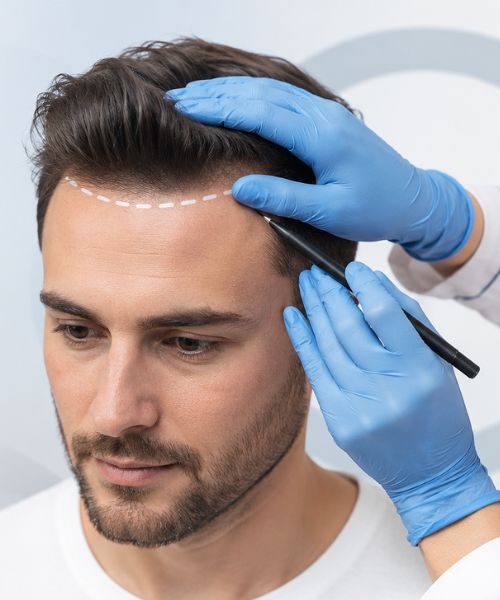
Follicular Unit Extraction
FUE Hair Transplant (Follicular Unit Extraction) is still the technique most patients end up with.
Good option if downtime is a concern and the area needing coverage is on the larger side.
Direct Hair Implantation
More precise. Follicles go in directly with tools built to control the angle and depth as they're placed.
This is often the pick for frontal work, where a slightly wrong angle is the difference between looking natural and looking done.
Natural-looking hairline design
The hairline is really the whole game. Move it wrong, and even a technically perfect transplant looks off.
We design hairstyles tailored to each client's face shape, age, and current hair volume. This is because a style that looks great in someone else's "before-and-after" photos might not suit you.
Ask five clinics for hair transplant cost bangalore quotes, and you'll get five different numbers. Here's roughly why:
| Factor | Impact |
|---|---|
| Number of grafts | More grafts, higher cost |
| Technique (FUE / DHI) | DHI usually runs higher |
| Hair loss stage | Advanced cases cost more to treat |
| Doctor expertise | Experienced hands charge more |
If there's one thing worth saying plainly here, don't just chase the cheapest number. A lower quote often means fewer grafts per session, or a less experienced person doing the extraction. What actually matters is whether the result looks natural, whether it's safe, and whether the clinic's being straight with you about what your case needs.
That's the whole reason consultation comes before anything gets booked. Some cases just aren't a good match for surgery, and a clinic that says so upfront, instead of scheduling you anyway, is one worth trusting more, not less.
Usually, male pattern baldness, a receding hairline, or thinning at the crown.
More often tied to hormonal changes, post-pregnancy shedding, or thinner density in specific spots rather than a clean receding line.
The two patterns don't behave the same way, so treatment gets built differently depending on which one you're dealing with.
Scalp isn't the only place this applies.
Fills in patchy spots and adds density where growth has always been thin.
Restores thinning brows, shaped to follow the direction your hair naturally grows.
Both have picked up steadily in Bangalore, mostly from people tired of daily makeup or microblading upkeep and looking for something that doesn't need redoing.
6 – 8 hours
7 – 10 days
Shedding phase (normal)
Initial growth
Visible improvement
Full results
After that, it just keeps growing on its own, the way your hair always has, because it is your hair — it's just living somewhere new now.
MBBS, MD (Dermatology)
Behind every hairline we design and every graft we place is a dermatologist who treats hair restoration as medicine first, cosmetic result second. Dr. Vidya C leads the clinical side of hair and skin care at Perfect U, and her approach starts the same way every time — understanding why the hair loss is happening before deciding how to fix it.
Yes, assuming it's done by people who actually know what they're doing, in a clinic that's properly maintained. At Perfect U, that means a sterile setup, procedures led by the doctor rather than handed off, and equipment kept to clinical standards — graft handling follows ISHRS-recommended practice, so the grafts stay viable through the process.
Risk stays low when it's done right. Which, really, comes down to who's holding the tools more than the procedure itself.
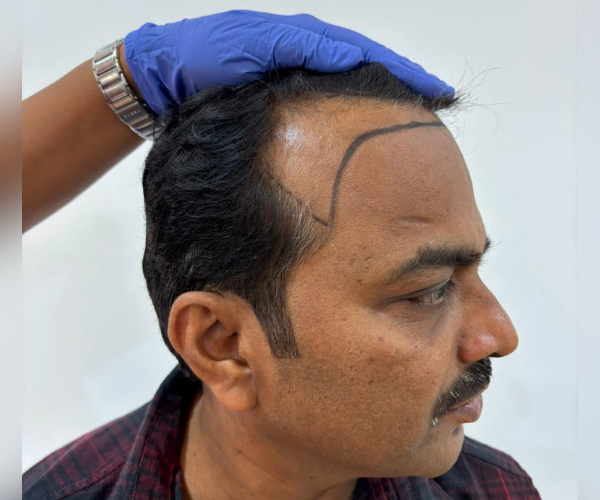
In reality, people aren't just looking for a "medical procedure." They are looking for a hair transplant clinic in Bangalore that they can trust with their appearance. And honestly, that kind of trust isn't built on a single success story. It is built by paying attention to every detail and consistently delivering perfect results in every case.
This table comes up a lot with patients looking into hair plantation in Bangalore. Truth is, the "better" option isn't universal — it comes down to your hair loss pattern more than which technique sounds more advanced on paper.
| Feature | FUE | DHI |
|---|---|---|
| Technique | Extraction + Implant | Direct Implant |
| Precision | Medium | High |
| Density | Good | Very High |
| Cost | Moderate | Higher |
Not really, no — it's done under local anesthesia, so you shouldn't feel much during the actual procedure. Some soreness for a day or two after is normal and easy to manage with basic aftercare.
Depends on how far along the hair loss is and how much area needs covering. Most patients land somewhere between 1,500 and 4,000 grafts, but that number only gets confirmed after an actual scalp analysis — not over the phone.
The transplanted follicles are genetically resistant to DHT, so once they've settled in, they tend to keep growing for life. What's worth knowing: hair you didn't transplant can still thin with age or ongoing pattern loss, which is why maintenance therapy sometimes gets added alongside the surgery.
Generally, above 90% when the procedure follows proper graft-handling protocol and aftercare instructions are followed. Survival has a lot more to do with technique and post-op care than the surgery day itself.
Desk job, usually 3–5 days. Anything physical or intense needs more time — closer to 1–2 weeks — so the grafts aren't disturbed while they're still bedding in.
If the hairline's been planned properly — face shape, age, natural growth direction all factored in — it shouldn't look different from hair that was always there. Most transplants that look "off" come down to a badly planned hairline, not the surgery itself.
Depends on the case, honestly. FUE tends to work better for larger areas. DHI is more precise for detailed work like the front hairline. Neither wins outright — it's whichever suits your specific pattern, which is exactly what consultation is for.
Yes. Female hair loss is usually more spread out — overall thinning rather than a receding line — so graft placement looks a little different, though the underlying technique is the same.
Yes — men are actually the most common patients for this procedure, usually dealing with male pattern baldness, a receding hairline, or thinning at the crown. Since this pattern tends to be more predictable than female hair loss, graft planning is often a bit more straightforward, though the hairline design still needs to be worked out carefully for each face.
No, it's expected, even though it often catches people off guard. Around 2–3 weeks after the procedure, the transplanted hair naturally sheds.
Perfect U runs as a hair transplant clinic in Yelahanka, and we see patients from across Bangalore for consultation, the surgery itself, and every follow-up after. It's all one team, one location — the person who does your extraction and implantation is the same one checking on you afterward, not someone new each visit.
Book a consultation with our hair transplant specialists today.
Book appointment